
What Does a Spirometry Test Measure?
Spirometry measures airflow and is commonly used in the assessment of asthma, COPD and other breathing conditions.
 Written byDr. Mohammad Fawzi KatranjiMedical reviewerDr. Mohammad Fawzi Katranji
Published · Medical review pending
Quick answer
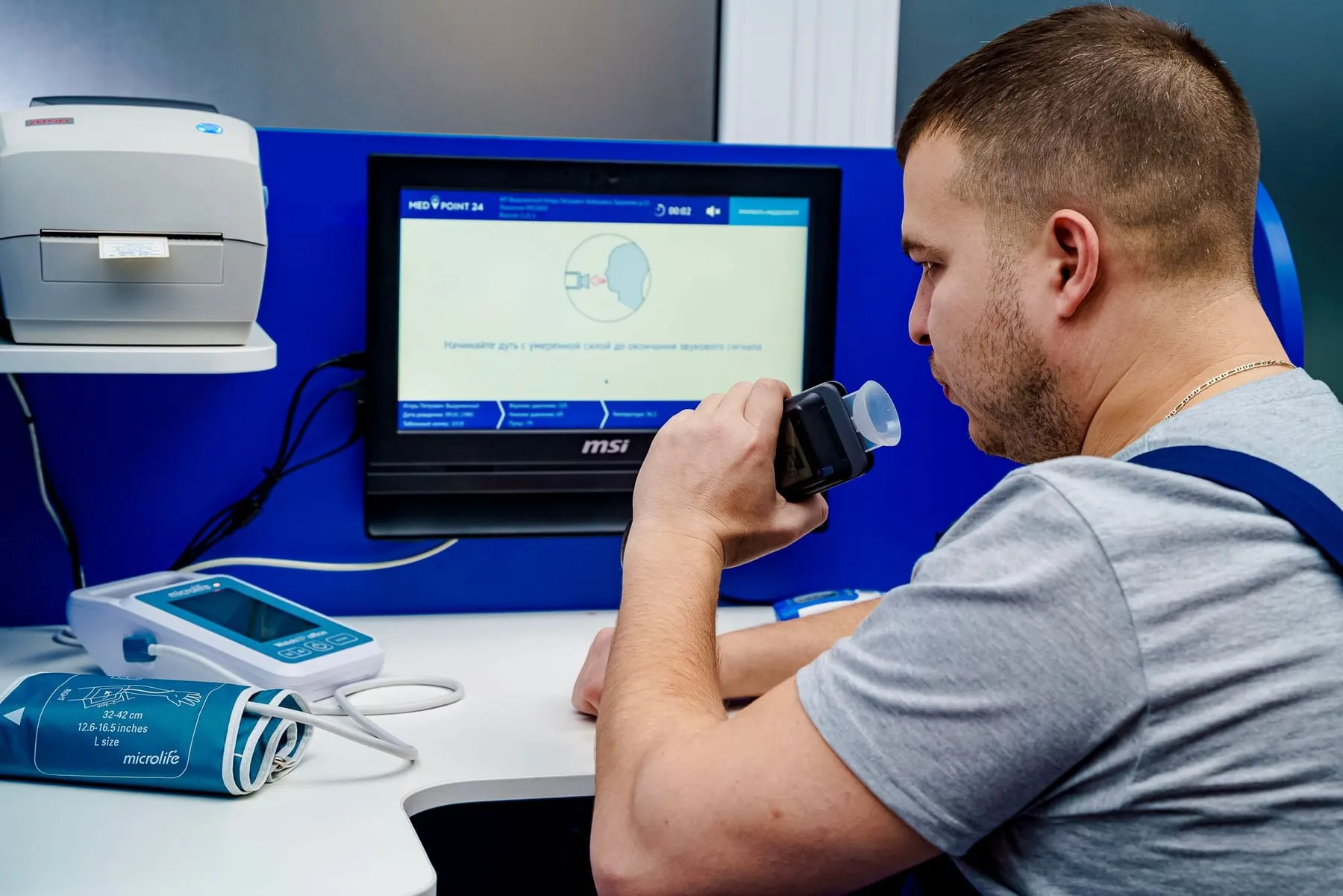
Spirometry is a simple breathing test. You take a deep breath in, then blow out as hard and as fast as you can into a mouthpiece. It measures how much air you can blow out and how quickly, which helps assess conditions such as asthma and COPD.
What do the main numbers mean?
- FVC (forced vital capacity): the total amount of air you can blow out after a full breath in.
- FEV1 (forced expiratory volume in 1 second): how much of that air you blow out in the first second.
- FEV1/FVC ratio: the share of your breath that comes out in the first second. A low ratio can suggest narrowed airways.
Why is spirometry used?
It helps doctors see whether the airways are narrowed, how severe that is, and whether breathing improves after an inhaler medicine. It is also used to follow lung conditions over time.
How should you prepare?
Wear loose clothing and follow any instructions about your usual inhalers. The clinic will tell you if you need to pause any medicine before the test.
What happens next?
Results are read together with your symptoms and history. On its own, a spirometry result does not make a diagnosis. Learn more about spirometry at the clinic.
Medical information. This article is educational and does not replace individual medical advice. In an emergency call 998.
Questions readers ask
Does spirometry hurt?
No. It can feel tiring because you blow out hard several times, and some people feel briefly lightheaded.